
Commercial Properties in Connecticut book Leaf Removal in Summer. Here's why.

Photo by Natalya Sh
If you manage a commercial property in Connecticut, you already know fall comes fast. One week the trees look great. Next, you have leaves covering every walkway, parking island, and drainage grate on the property.
The problem is not the leaves themselves. It is the speed.
A light layer on Monday turns into a wet, compacted mess by Friday after wind and rain. At that point, it is not an appearance issue anymore. It is a safety issue, and potentially a liability one.
This post covers what a professional leaf removal service actually includes for commercial properties, why the stakes are higher than on a residential job, and how to set up a fall schedule that keeps your property covered without scrambling every time it rains.
Quick answer: what does a commercial leaf removal service include?
A commercial leaf removal service clears fallen leaves and seasonal debris from all zones of a property — lawns, walkways, parking areas, planted beds, building entrances, and drainage grates — and hauls everything away.
Most commercial properties in New Haven County need two to three scheduled visits between early October and mid-November, with optional add-ons like gutter cleaning and a final mow.
What is a commercial leaf removal service?
A commercial leaf removal service is a scheduled cleanup that removes fallen leaves and seasonal debris from commercial properties, including office parks, retail centers, apartment complexes, HOA communities, warehouses, and multi-unit residential buildings.
It differs from a one-time residential cleanup in a few important ways.
Commercial jobs involve larger surface areas with multiple zones, higher leaf volume, more frequent visits during peak season, and the kind of crew and equipment that can move through a property quickly without cutting corners.
Most commercial clients also need haul-away included, since leaving debris on-site defeats the purpose.
The goal is not just a presentable property. It is a safe, functional one that holds up through the entire fall season, not just the day after a cleanup.
Why leaves create bigger problems on commercial properties
On a residential lawn, leaves are mostly a cosmetic issue. On a commercial property, they create real operational and legal exposure.
Slip and fall hazards. Wet, matted leaves on walkways, ramps, and building entrances are a documented slip risk. When someone gets hurt on a poorly maintained property, the owner or manager carries the liability. Consistent leaf removal is one of the lowest-cost ways to reduce that exposure.
Drainage blockages. Commercial properties typically have large paved surfaces that feed into storm grates or catch basins. Leaves pile up near those openings and block drainage, which leads to standing water, pavement damage, and pest attraction — all problems that cost more to fix than prevent.
Tenant and visitor perception. Leaves covering a property signal neglect, even when the building itself is in good shape. For retail tenants, office tenants, and apartment residents, the grounds are the first thing they see. Fall cleanup is part of what a well-managed property looks like.
Lawn and landscape damage. A heavy leaf layer blocks sunlight, traps moisture against grass, and suffocates plant beds. Left through winter, it causes turf damage that shows up in spring and costs real money to repair. Spring cleanup can address what survives, but prevention is cheaper.
What a thorough leaf removal service covers
A reliable leaf removal service for commercial properties goes beyond blowing leaves to the curb. Here is what a complete service looks like:
Full leaf pickup across all zones. Lawns, planted beds, building perimeters, parking islands, and common areas, not just the visible front of the property.
Hard surface clearing. Walkways, building entrances, loading docks, stairs, and parking areas get blown clean, not just the grass.
Drainage area clearing. Leaves cleared away from storm grates and catch basins so drainage stays open through fall rains.
Storm debris pickup. Sticks, twigs, and light branches that come down alongside leaf fall.
Bagging and haul-away. Everything leaves the property. No piles left on the sidewalk or pushed to the edge of the lot.
Optional add-ons. Gutter cleaning, a final mow, edging, and roof blow-off are common additions for properties that want a complete end-of-season service.
If you are looking for a leaf cleanup near you for a commercial site, make sure the company you contact has actual experience with commercial-scale work and schedules recurring visits, not just one-time calls.

Photo by Sóc Năng Động
How often does a commercial property need leaf removal in Connecticut?
In Connecticut, peak leaf drop runs from late September through mid-November, with the heaviest volume concentrated in a two-to-three week stretch in October.
Most of New Haven County sees its biggest leaf fall between the third week of October and the first week of November.
One cleanup is rarely enough. Leaves keep falling after each visit, and a property that goes three or more weeks without service often ends up worse than before; packed-down, wet leaves are harder to remove and do more damage to turf than fresh ones.
A practical schedule for most commercial properties looks like this:
Early October: First visit to clear early leaf drop and get a read on volume
Late October: Main cleanup during peak fall, when most of the leaves have dropped
Early to mid-November: Final visit before winter, clearing what is left and picking up storm debris
Properties with dense tree coverage or heavy foot traffic may need weekly service during peak weeks. Others can manage with two well-timed visits.
A good service provider looks at the actual property and recommends a schedule based on what it needs, not a one-size answer.
Why commercial properties outsource leaf removal instead of handling it in-house
Most commercial properties have some maintenance staff. Fall leaf removal is one of the areas where in-house teams consistently hit a wall.
The volume and pace of leaf fall during peak season in Connecticut moves faster than a small crew can keep up with.
A professional team with commercial blowers and a haul truck clears a property in a few hours. The same job takes an in-house crew most of a day, ties up their schedule for other tasks, and still rarely reaches the same result.
Beyond speed, a dedicated leaf removal service brings equipment designed for the job, crews that know how to clear around landscaping without damaging it, and reliable scheduling so the property manager does not have to coordinate every visit.
That matters especially for managers running multiple properties across New Haven County.
Outsourcing this one task during fall frees up the in-house team, keeps the property consistent, and removes one more thing from the list.
For most property managers, that math is straightforward.
What does commercial leaf removal cost in Connecticut?
Pricing for commercial leaf removal varies based on property size, tree coverage, number of zones, access, and visit frequency. Most providers quote per visit or as a seasonal package.
At Diamond Image, fall cleanups for commercial properties in New Haven County are quoted after a quick look at the site.
The fastest way to get a real number is to send your town, property size, and a couple of photos. Most quotes come back within 24 to 48 hours.
For a full breakdown of what drives leaf removal pricing in Connecticut, including typical ranges for different property types, see our guide: Leaf removal in CT: costs and what to expect.
Why booking early makes a difference
Most commercial property managers who wait until October to find a leaf removal service run into the same problem: the reliable crews are already booked.
Fall is the busiest season for outdoor property services across Connecticut. Companies that do consistent work fill their schedules before the first leaves drop.
Waiting until the problem is visible means competing for whatever availability is left, which usually means one-off visits, inconsistent crews, or no availability at all during peak weeks.
Booking a seasonal leaf removal service in summer or early fall gives the property a set schedule before demand spikes.
It also gives the service provider time to assess the property properly and build a visit cadence that actually fits it.
For commercial properties in New Haven County, the right time to lock in fall service is well before you need it.
Leaf removal service in New Haven County, CT
Diamond Image provides professional leaf removal and fall cleanup for commercial properties throughout New Haven County, including New Haven, Hamden, East Haven, West Haven, Milford, Branford, Wallingford, Orange, and North Haven.
Our team handles commercial-scale work with the right equipment and a consistent crew. We work with property managers, HOAs, commercial landlords, and business owners who need dependable fall service without having to think about it every week.
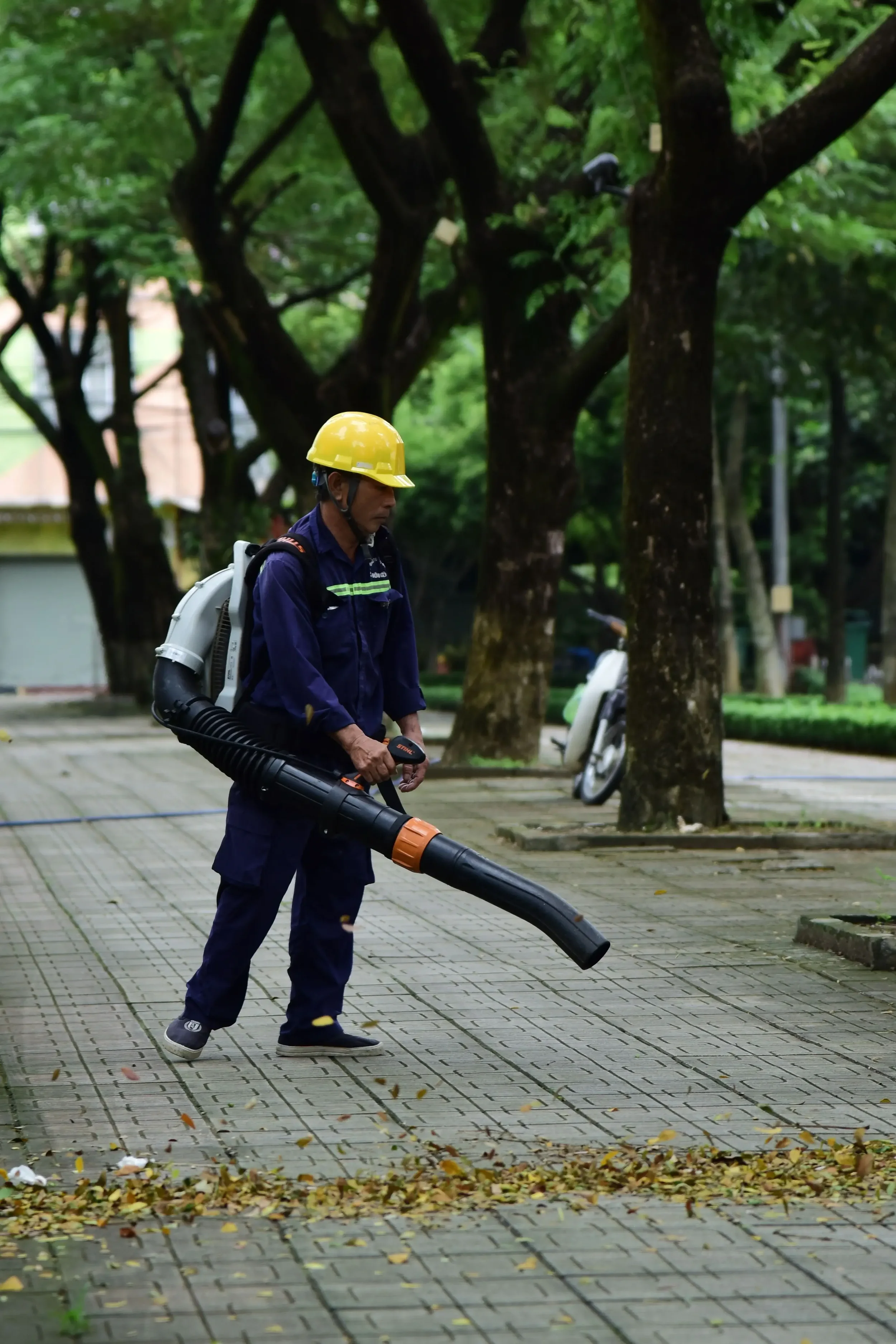
Photo by Sóc Năng Động
FAQs: Leaf Removal Service for Commercial Properties in Connecticut
Q1. What is included in a commercial leaf removal service?
A commercial leaf removal service clears leaves from lawns, planted beds, walkways, parking areas, and building entrances. The crew blows debris away from drainage grates, picks up sticks and storm debris, and hauls everything off the property. Add-ons like gutter cleaning and a final mow are available depending on what the property needs.
Q2. How often should a commercial property in Connecticut schedule leaf removal?
Most commercial properties in New Haven County need two to three visits during fall: one in early October, one during peak leaf drop in late October, and a final cleanup in early November. Properties with heavy tree coverage or high foot traffic may need weekly visits during peak season.
Q3. When is the best time to book fall leaf removal in Connecticut?
Before fall starts. Crews with reliable schedules book up early, and properties that wait until October often find limited availability. Booking in summer or early fall locks in service before peak demand.
Q4. Why is leaf removal more important on commercial properties than residential ones?
Commercial properties carry more liability exposure from slip hazards, deal with larger paved surfaces that block drainage when leaves pile up, and face higher appearance expectations from tenants, customers, and visitors. The stakes of skipping fall cleanup are higher.
Q5. Can my maintenance crew handle leaf removal instead of outsourcing it?
For small properties, maybe. For anything with multiple zones, heavy tree coverage, or more than an acre of grounds, a professional crew with commercial equipment moves faster and produces better results. It also frees up the in-house team for other work during a busy season.
Q6. How much does commercial leaf removal cost in Connecticut?
Pricing depends on property size, number of zones, tree coverage, and visit frequency. For a detailed breakdown of what drives cost and typical ranges in New Haven County, see: Leaf removal in CT: costs and what to expect. For a quote on your property, contact Diamond Image with your town, size, and a few photos.
Q7. Does Diamond Image serve commercial properties across New Haven County?
Yes. Diamond Image provides commercial leaf removal and fall cleanup across all of New Haven County, CT, including New Haven, Hamden, East Haven, West Haven, Milford, Branford, Wallingford, Orange, and North Haven. Contact us to get a free quote.
Reviewed by the Diamond Image field crew.